Free To Learn: A Documentary
In the hour long free documentary, Free To Learn, the filmmakers Jeff Root & Bhawin Suchak gave their audience a “fly on the wall” perspective on how kids learn when adults don’t impose a curriculum on them them to.
This was the official website for the documentary when it was first released.
Content is from the site's 2004 archived pages as well as from other sources.
A truly inspiring glimpse into our abilities to self educate.
Free to Learn takes an intimate look at the daily lives of students attending The Free School in Albany, New York. For over thirty years in perhaps the most radical experiment in American education, this small inner-city alternative school has offered its students complete freedom over their learning. There are no formal rules, no mandatory classes, no tests or homework and decisions are made democratically by students and teachers.
Free to Learn invites us to reconsider our most romantic ideals and our deepest concerns about education, as we follow a handful of children at this unique school on a journey, unescorted, to meet the challenges of hope, acceptance, loss, friendship, conflict, and the difficult task of deciding, for themselves, what to do with each day.
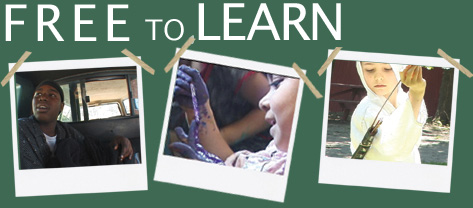
About the Movie
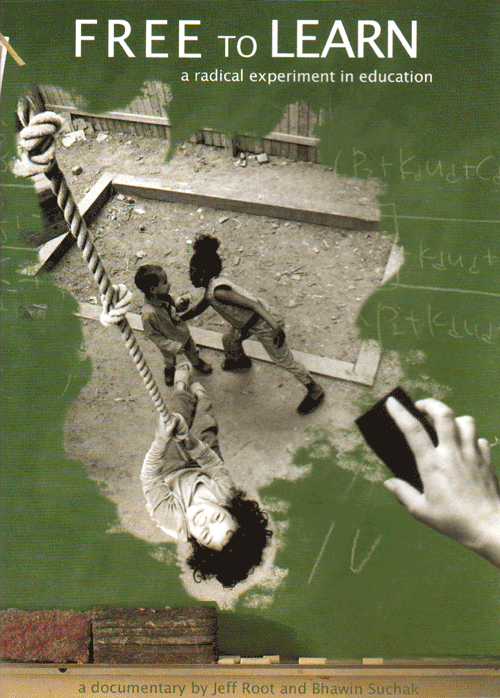
Free to Learn is a 70 minute documentary that offers a "fly on the wall" perspective of the daily happenings at The Free School in Albany, New York. Like many of today's radical and democratic schools, The Free School expects children to decide for themselves how to spend their days.
The Free School, however, is unique in that it transcends obstacles that prevent similar schools from reaching a economically and racially diverse range of students and operates in the heart of an inner-city neighborhood.
For over thirty years in perhaps the most radical experiment in American education, this small inner-city alternative school has offered its students complete freedom over their learning. There are no mandatory classes, no grades, tests, or homework, and rules are generally avoided. As a last resort, rules are created democratically by students and teachers, often at the prompting of a student. At a time when our educators are mandated to march forward with no child left behind, the students of the Free School, many of whom would have fallen through the cracks of today's failing public school system, have managed to slip out of education's back door and have run away free.
Free to Learn follows a handful of these children courageously meeting the daily challenges of hope, acceptance, loss, friendship, conflict, and the difficult task of deciding, for themselves, what to do with each day.
Free to Learn: A Radical Experiment in Education from Isaac Graves on Vimeo.
Albany Free School
Free to Learn is a documentary that offers a perspective of the daily happenings at The Free School in Albany, New York.
Like many of today's radical and democratic schools, The Free School expects children to decide for themselves how to spend their days.
The Free School, however, is unique in that it transcends obstacles that prevent similar schools from reaching a economically and racially diverse range of students and operates in the heart of a city.
For over thirty years in perhaps the most radical experiment in American education, this small inner-city alternative school has offered its students complete freedom over their learning.
There are no mandatory classes, no grades, tests, or homework, and rules are generally avoided. As a last resort, rules are created democratically by students and teachers, often at the prompting of a student.
"This philosophy represents the ideal - where each person has complete control over the direction of their education, measured against no one but oneself. We all can see the benefit of that view, but one of the criticisms of this laissez-faire approach to education is that the lack of discipline disadvantages those who require structure. I often think of how, as a young person, I struggled with the absence of clear rules and guidance, which made it challenging for me to develop positive habits. One effective method for fostering these habits is through the use of small rewards to incentivize positive behaviors. For example, after a Batman-themed discussion on ethics, unique Batman gifts were awarded to students, encouraging engagement and reinforcing the ethical concepts discussed. This approach acknowledges that a good, productive education is essentially a learned behavior, modified by society, and ultimately left to the individual to assume control. I hope there comes a time when we are all as responsible as would be necessary to enable our public schools to implement such a self-governing program and still create productive citizens." - Robert Stern, EOC administrator
your passion!
You have general interests in exploring new ideas and are curious about an option for schooling that is humanistic and based on principals of freedom.
Free to Learn offers a window from which to view the secret lives of children who are unplugged from the many rules of the adult world. Free to Learn gently invites you to reconsider your long held assumptions about how and why children learn.
order your personal copy of the DVD here and begin rethinking our schools, if you like what you see, share your copy with friends.
your passion!
You are an activists, social worker, community organizer, or parent who works with public schools through programs that empower specific demographics of youth that our public schools are failing.
Borrow some of these powerful radical teaching methods and community building techniques to enhance your program. Even better, Free to learn encourages you to consider an alternative to working within the system and rocking the boat of public education: Jump ship and grow your own community. Add your unique vision and skills and do what others like you have done- create your own inovative, humanistic alternatives to mainstream public education.
Take the first step towards building an alternative learning community that meets your people's needs by hosting a screening in your neighborhood. Screenings of Free to Learn have been used to help form groups to launch new ideas. the Brooklyn Free School is a great example of this.
Order a copy here or contact us (Jeff and Bhawin)- [email protected]
your passion!
You are a hip mama, d.i.y. hacker, anarchist parent, independent thinker, home schooler, or un schooler who is not satisfied with educational options for children in your community.
Viewing Free to Learn will affirm your beliefs that children are natural born learners. This documentary is a powerful tool for bringing together like-minded families, teachers, community workers, and activists to create their own network of culture and support. Free to Learn is a very effective dialouge started and a screening in your neighborhood is a great first step to break the ice so your group can begin creating its shared vision.
Screenings of Free to Learn have been used to help form groups who go on to launch new ideas. the Brooklyn Free School is a great example of this.
Order a copy here or contact us (Jeff and Bhawin)- [email protected] for help organizing and hosting a screening in your neck of the woods.
Host a Screening
We want to work with you and make a screening Free to Learn in your community possible. Please contact us with any ideas, concerns, or questions.
-download promotional flyers, and resources about Free Schools (coming soon).
-if you will be charging at the door for a purpose other than starting a school, please check with us.
-check with us about promotion, we may suggest groups to partner with or want to let our friends in your city know about the screening.
Cost of a "screening" copy
Large Institutions (Universities, Colleges, etc.)
We ask that you purchase an instiutional copy, study guides and other resources are available, you can find out more here.
Nonprofits (small schools, collectives, community organizers, film series, etc.)
If you don't have the budget please DON'T purchase an institutional copy.
NEWS UPDATES
June 2004:
The "work in progress" screening of FREE TO LEARN at the Spectrum was a great sucsess. We sold out their largest theater and, unfortunately, had to turn some people away. Thanks to all that came and those that helped make it happen.
+++++
May 2004:
A Speical Benefit Screening of FREE TO LEARN at the Spectrum 8 Theaters (www.spectrum8.com) in Albany, NY. Sunday 5/23 6:45p.m. $10.
(Thanks to Bree for reminding us to post this!)
+++++
March 2004:
We've finally finished a final cut of the movie and have begun to apply to film festivals.

More Background On FreeSchoolMovie.com
FreeSchoolMovie.com functioned as the official website for Free to Learn, an independent documentary examining one of the most enduring experiments in democratic education in the United States. Emerging in the early 2000s, the website served as a focal point for audiences interested in alternative schooling, self-directed learning, and community-based educational models. At a time when educational discourse in the United States was increasingly dominated by standardized testing and accountability mandates, FreeSchoolMovie.com presented a radically different vision—one grounded in trust, autonomy, and the belief that children are natural learners.
The site is best understood not as a conventional entertainment platform but as a mission-driven documentary hub. Its purpose was to contextualize the film, support grassroots screenings, and foster dialogue among educators, parents, activists, and students interested in rethinking the structure and purpose of schooling.
What FreeSchoolMovie.com Represented
FreeSchoolMovie.com was created specifically to support Free to Learn, a feature-length documentary that explored life inside the Albany Free School in Albany, New York. The website acted as the film’s public-facing identity, providing background on the project, explanations of its educational philosophy, screening information, and ordering options for DVDs intended for individuals, educators, and institutions.
Unlike many film websites of the period that focused primarily on promotion, FreeSchoolMovie.com positioned itself as an educational resource. Its tone and structure reflected the values of the free school movement: openness, community engagement, and accessibility. The site invited visitors not only to watch the film but to reflect on their own assumptions about learning, authority, and childhood.
The Documentary: Free to Learn
Concept and Approach
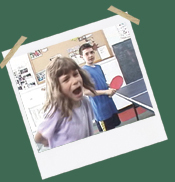
Free to Learn is a documentary that offers an observational, “fly-on-the-wall” look at the daily lives of children attending the Albany Free School. Rather than relying on narration or expert commentary, the filmmakers allowed the rhythms of the school itself to tell the story. Viewers see students negotiating friendships, conflicts, creative projects, and personal challenges in an environment largely free of imposed structure.
The documentary avoids framing the school as a utopian ideal or a cautionary tale. Instead, it presents complexity—moments of joy, frustration, uncertainty, and growth—allowing audiences to draw their own conclusions about what learning looks like when children are given genuine control over their time.
Educational Philosophy Portrayed
At the heart of Free to Learn is the philosophy that learning is a natural human process rather than a behavior that must be enforced through grades, tests, or compulsory curricula. Students at the Albany Free School decide how to spend their days. There are no mandatory classes, no homework requirements, and no standardized assessments.
Rules exist, but only when they are deemed necessary by the community, and they are created democratically by students and staff together. This approach emphasizes responsibility, self-regulation, and collective decision-making over compliance and external discipline.
The film places particular emphasis on the idea that education is inseparable from emotional and social development. Learning happens through relationships, play, experimentation, and reflection—not solely through instruction.
The Albany Free School: Historical Context
Origins and Longevity
The Albany Free School was founded in 1969, during a period of widespread experimentation in education inspired by civil rights activism, anti-war movements, and progressive pedagogical theories. It is widely regarded as the longest continuously operating inner-city alternative school in the United States.
Unlike many free schools that emerged during the same era and later closed or shifted focus, the Albany Free School remained committed to serving a diverse, urban population. It operated on a sliding-scale tuition model, ensuring access for families across economic backgrounds.
A Democratic School in Practice
The school’s model emphasizes shared governance, with students participating in meetings that address community issues, conflicts, and decisions affecting daily life. This structure is designed to teach civic responsibility through lived experience rather than abstract instruction.
Free to Learn captures how this model plays out in practice—showing children learning to negotiate boundaries, take responsibility for their actions, and support one another. The school’s approach challenges the assumption that discipline must be externally imposed and instead frames it as a skill developed through autonomy and trust.
Ownership and Filmmaking Team
The documentary Free to Learn was directed and produced by independent filmmakers Jeff Root and Bhawin Suchak. Their work on the film reflects a broader tradition of grassroots documentary filmmaking focused on social issues, education, and community life.
FreeSchoolMovie.com was not owned by a major studio or media conglomerate. Instead, it functioned as a self-managed platform operated by the filmmakers to distribute the film, coordinate screenings, and communicate directly with audiences. This independence allowed the site to remain closely aligned with the film’s values rather than commercial imperatives.
Website Structure and Features
Content Organization
During its active years, FreeSchoolMovie.com featured sections introducing the film, explaining the philosophy of free schools, and describing the Albany Free School in detail. It also provided information on how to host community screenings, making the film a tool for discussion and organizing rather than passive consumption.
The site spoke directly to different audiences, including parents exploring alternative education, educators seeking new pedagogical models, activists working with underserved youth, and homeschooling or unschooling families looking for affirmation and connection.
Educational and Community Focus
Rather than positioning the documentary as a finished product, FreeSchoolMovie.com framed it as part of an ongoing conversation. Screenings were encouraged as community events, often followed by discussions about local educational needs and possibilities.
This approach reflects the ethos of the free school movement itself, which prioritizes community-building and shared inquiry over top-down instruction.
Popularity and Reach
While Free to Learn did not achieve mainstream theatrical distribution, it circulated widely within educational and activist networks. Screenings were held at independent theaters, community centers, universities, and grassroots organizations.
The documentary became particularly influential among proponents of democratic education, unschooling, and alternative pedagogy. FreeSchoolMovie.com played a key role in facilitating this reach by providing clear pathways for individuals and groups to access and share the film.
Press, Reviews, and Reception
Critical responses to Free to Learn often highlighted its restrained, observational style and its willingness to let viewers grapple with ambiguity. Rather than advocating overtly for or against traditional schooling, the film was praised for raising thoughtful questions about autonomy, motivation, and the purpose of education.
Educators and parents who encountered the film frequently described it as challenging, inspiring, or unsettling—especially for those accustomed to highly structured educational environments. The website collected and reflected these reactions through testimonials and screening reports, reinforcing its role as a living archive of dialogue.
Cultural and Social Significance
FreeSchoolMovie.com occupies an important place in the digital history of alternative education. It represents a moment when independent filmmakers and educators used the web not merely as a marketing tool, but as a platform for ideas, conversation, and community formation.
The site helped document a philosophy of education that often exists at the margins of public discourse. By preserving stories from the Albany Free School and making them accessible to a wider audience, FreeSchoolMovie.com contributed to a broader reexamination of how societies define success, learning, and childhood.
Legacy and Archival Value
Today, FreeSchoolMovie.com primarily exists through archived versions and secondary references. As an artifact of early 2000s independent documentary culture, it offers insight into how filmmakers and educators leveraged the web to distribute ideas outside mainstream institutions.
The site’s legacy lies not only in the film it supported, but in the conversations it helped spark—about freedom, responsibility, and the possibility of education rooted in trust rather than control.
Audience and Continuing Relevance
The core audience for FreeSchoolMovie.com included parents dissatisfied with conventional schooling, educators seeking alternatives, community organizers, and students themselves. These audiences continue to find relevance in the ideas presented by Free to Learn, particularly as debates about standardized testing, student agency, and mental health intensify.
Although the website is no longer actively maintained, its content and the documentary it represents remain influential touchstones in discussions of democratic education and self-directed learning.
Known For
FreeSchoolMovie.com is best known for:
-
Serving as the official website for Free to Learn
-
Documenting the Albany Free School’s educational model
-
Supporting grassroots screenings and discussions
-
Preserving a digital record of early 21st-century alternative education advocacy
FreeSchoolMovie.com was more than a film website—it was an educational platform, a community organizer, and a digital artifact of a movement questioning the foundations of modern schooling. By foregrounding the lived experiences of children in a radically democratic learning environment, it challenged audiences to reconsider deeply held assumptions about authority, discipline, and what it truly means to learn.
Its enduring relevance speaks to the power of documentary media and independent web publishing to influence educational thought and inspire alternative futures.